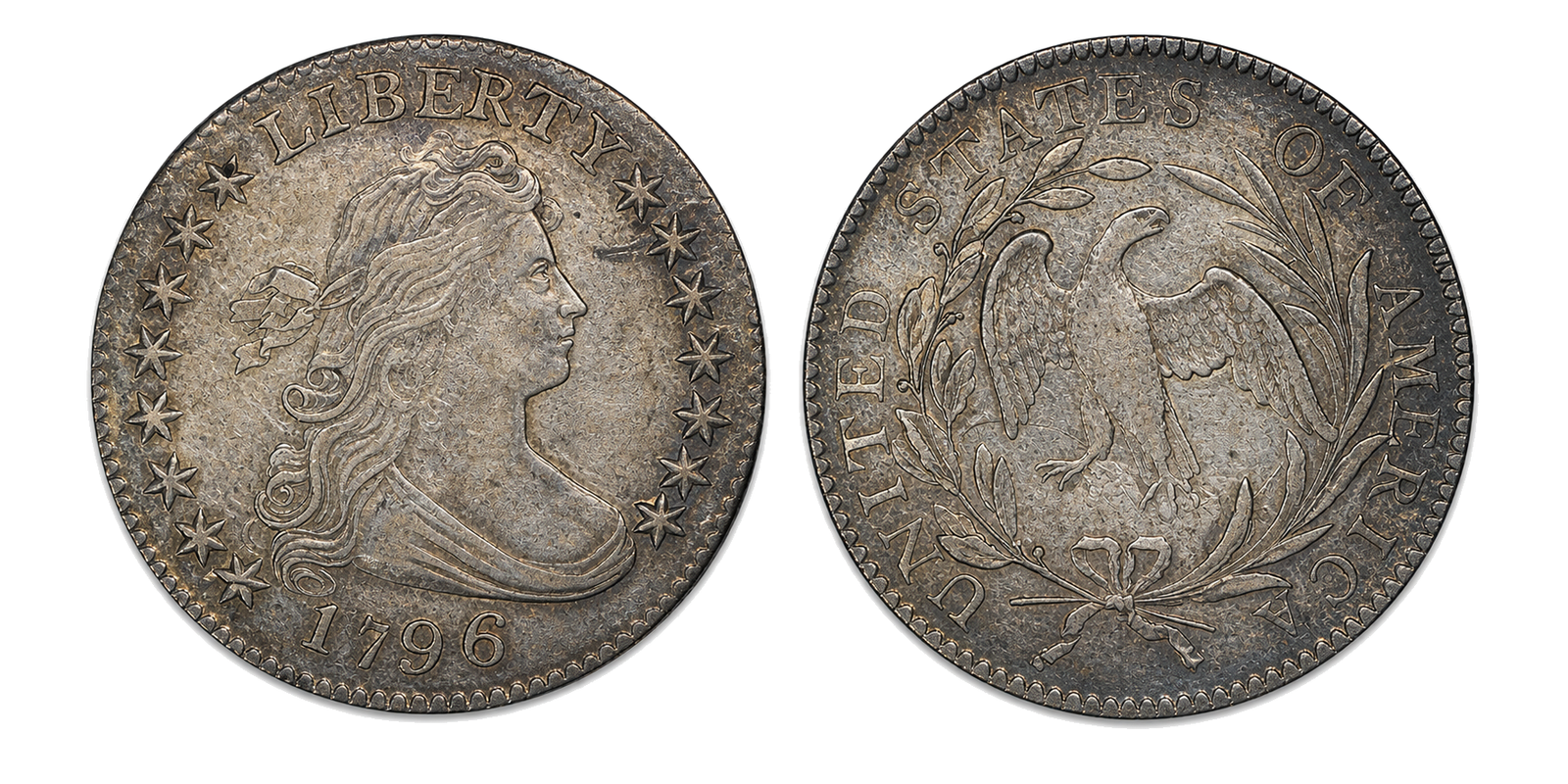
1796-1797 Small Eagle history
The dime denomination entered regular federal coinage in 1796 using Robert Scot's Draped Bust design. This first reverse type lasted only two years, making it a compact and distinctive early American type.
The Small Eagle reverse uses an open wreath around a modest eagle rather than the Great Seal-inspired device adopted later. Neither side states TEN CENTS or 10 C.; the denomination was understood from the coin's regulated weight and size.
Collectors separate the 1797 issues by obverse star count and examine surviving pieces for honest wear, readable dates, original surfaces, and evidence of cleaning or damage.
Draped Bust Dime history
The Draped Bust dime was the first regular federal dime design, beginning in 1796. Robert Scot’s obverse portrait of Liberty was paired at first with a small eagle reverse, a design used only in 1796 and 1797. In 1798 the Mint adopted a heraldic eagle modeled on the Great Seal, and that reverse continued through 1807. Low mintages, early Mint production methods, and numerous die varieties make the series an important area of early American numismatics.