Coin specifications and design
Design identification
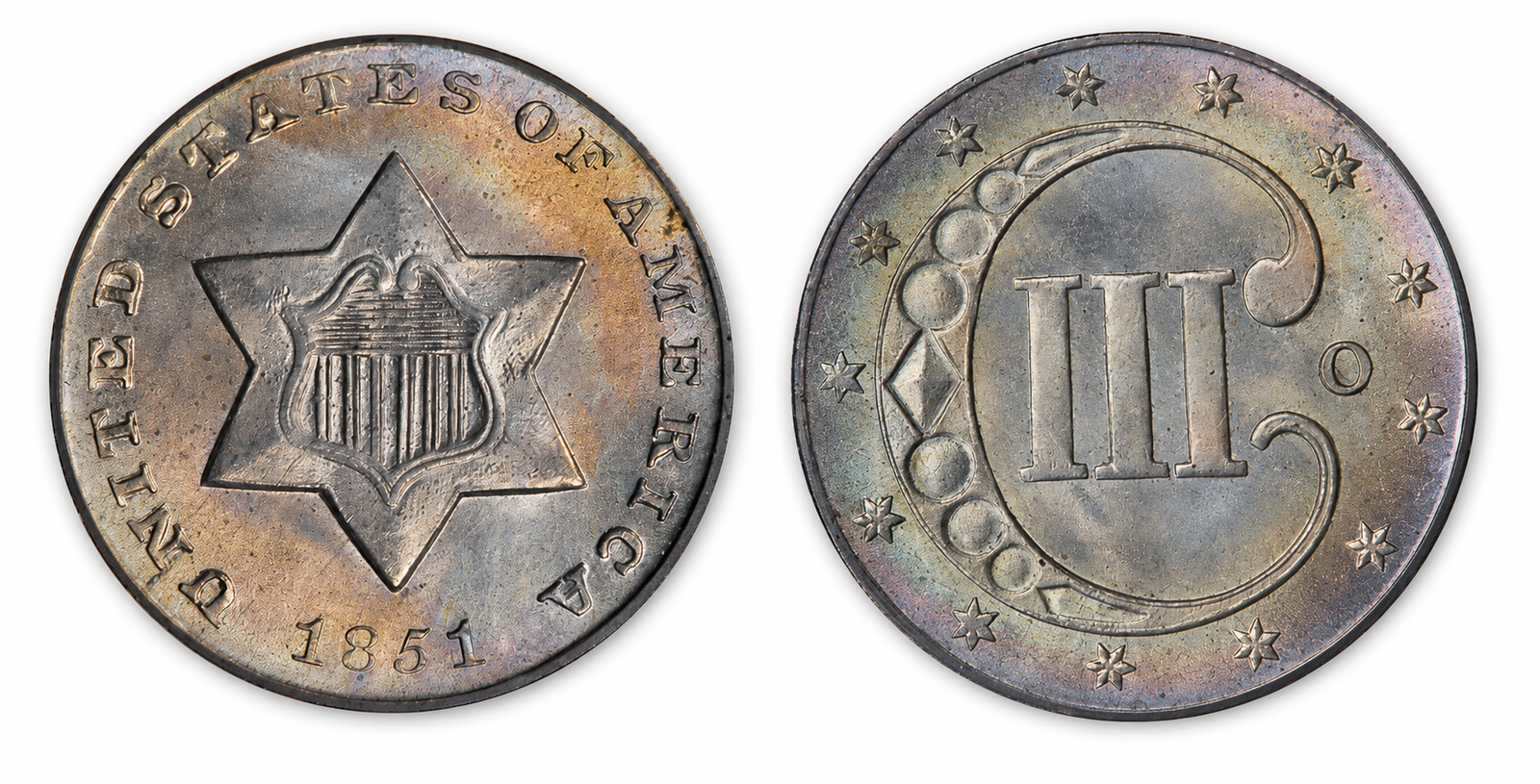
Obverse: A six-pointed star encloses a national shield, with no outline lines around the star.
Reverse: A Roman numeral III sits inside an ornamental C, surrounded by thirteen stars.

U.S. Mint coin reference
The tiny Type 1 silver three-cent piece was introduced alongside the reduction of the prepaid letter rate to three cents.
Obverse: A six-pointed star encloses a national shield, with no outline lines around the star.
Reverse: A Roman numeral III sits inside an ornamental C, surrounded by thirteen stars.
1851–1853: Silver Three-Cent Piece (Type 1: No Lines Bordering Star) introduced the three-cent silver denomination to facilitate small transactions during the postage-rate era. The first type used a 75% silver alloy and weighed 0.80 gram.
James B. Longacre’s six-pointed star and Roman numeral III identify the denomination. The 1854 revision raised fineness to .900, reduced weight to 0.75 gram, and added outline details, so it belongs to a separate subtype.
Congress authorized the denomination in 1851 as a convenient way to pay the new three-cent postage rate. Often called a “trime,” the Type 1 coin used a 75% silver alloy and became the first regular-issue United States silver coin below 90% fineness.
Type 1 is identified by the plain, unoutlined star. Collectors check the delicate star points, shield lines, date, and reverse III for wear, and they watch closely for bends, scratches, cleaning, and other damage on the very small planchet.