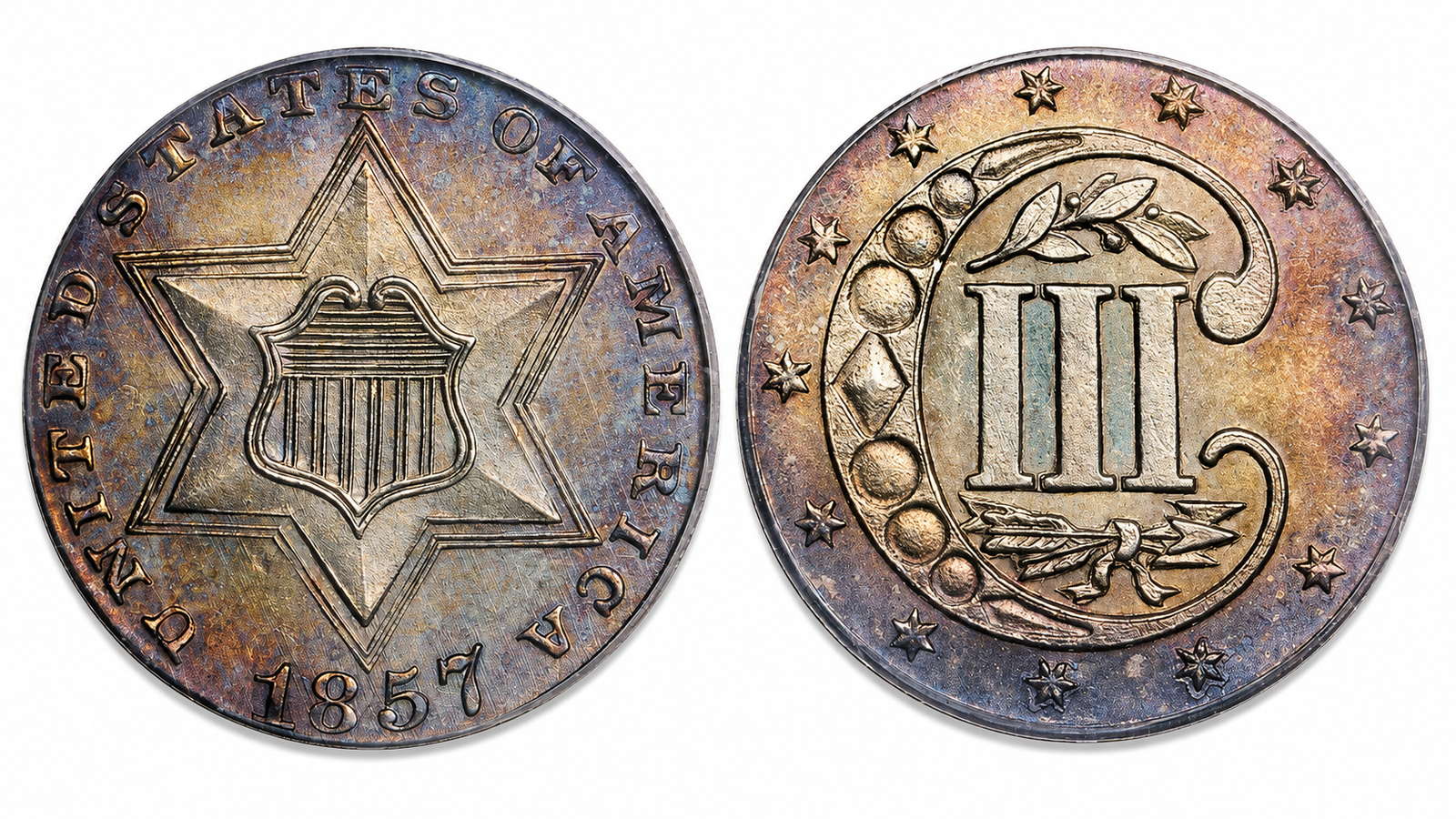
1854–1858: Silver Three-Cent Piece (Type 2: Three Lines Bordering Star) history
1854–1858: Silver Three-Cent Piece (Type 2: Three Lines Bordering Star) raised the denomination’s fineness to 90% silver while reducing its weight to 0.75 gram. Three outlines around the obverse star distinguish this short-lived revision.
The reverse retains the Roman numeral III but adds ornamental changes. Weak strikes and tiny planchets make complete star outlines and sharp reverse details useful attribution points.
Silver Three-Cent Piece Type 2 history notes
The Mint revised the silver three-cent piece in 1854 after the weight and fineness of subsidiary silver coinage changed. The new 90% silver coin was slightly lighter, and added design detail distinguished it from the earlier 75% silver type.
The three outlines around the star separate Type 2 from Types 1 and 3. Because the design is intricate and the coin is only 14 millimeters wide, weak strikes and rapid loss of fine detail are common concerns; original surfaces and sharp central details carry strong collector appeal.