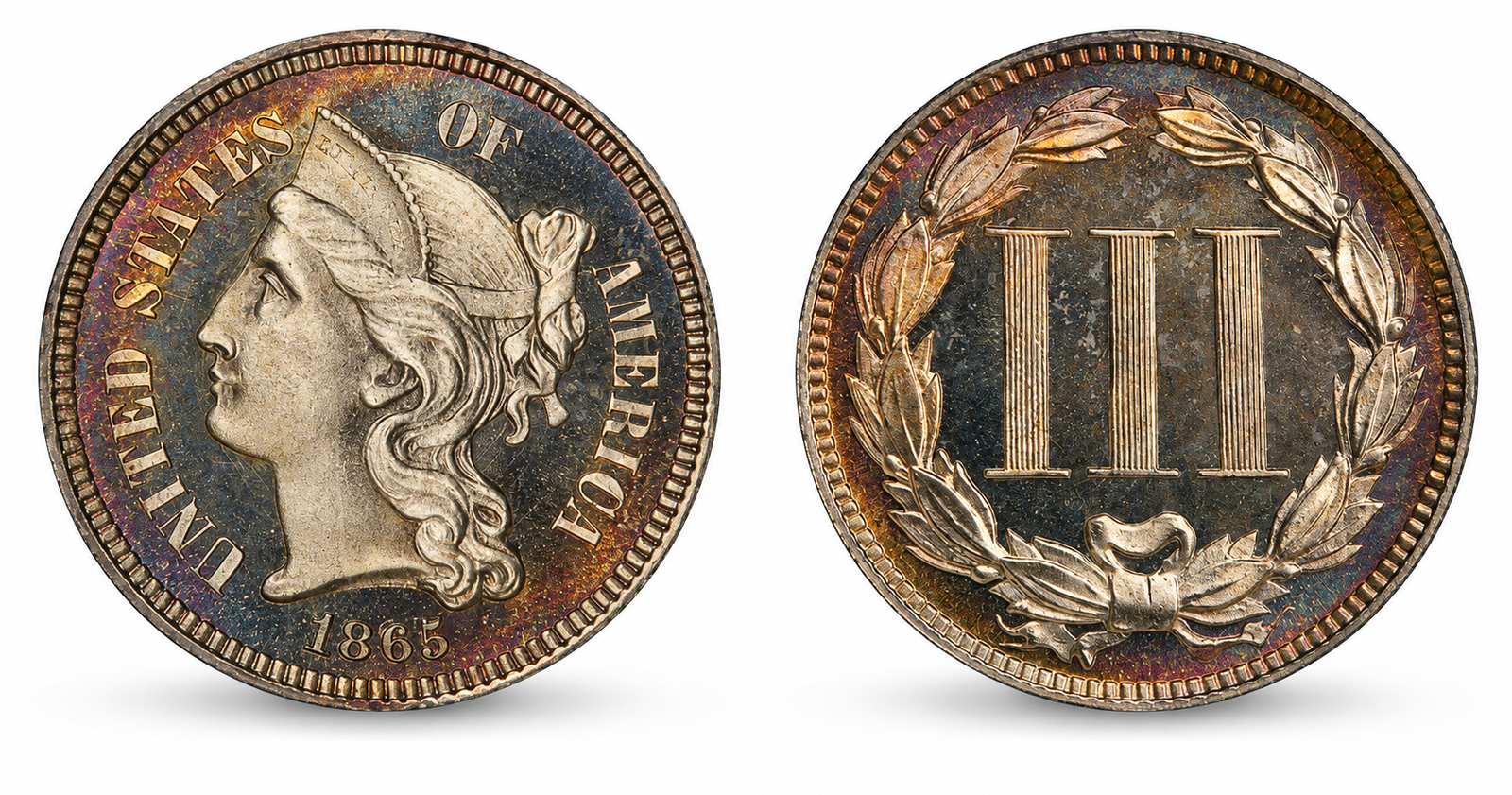
Coin specifications and design
Design identification
Obverse: A left-facing Liberty head wears a coronet inscribed LIBERTY, surrounded by UNITED STATES OF AMERICA and the date.
Reverse: A Roman numeral III appears within a laurel wreath.

U.S. Mint coin reference
The copper-nickel three-cent piece provided a durable, silver-free coin for small transactions after the Civil War.
Obverse: A left-facing Liberty head wears a coronet inscribed LIBERTY, surrounded by UNITED STATES OF AMERICA and the date.
Reverse: A Roman numeral III appears within a laurel wreath.
1865–1889: Liberty Head Nickel Three-Cent Piece introduced a copper-nickel three-cent coin while the silver three-cent piece was still in production. James B. Longacre’s coronet portrait and Roman numeral III identify the denomination.
The coin contains no silver and uses a plain edge. Mintages declined sharply late in the series, and proof production became more important as circulation demand disappeared.
Authorized in 1865, the copper-nickel three-cent piece was larger than the silver trime and arrived while paper fractional currency still circulated. It overlapped the silver three-cent denomination through 1873, then continued alone until Congress discontinued it in 1890.
The hard copper-nickel alloy could be difficult to strike fully, so collectors inspect the hair, coronet lettering, and reverse III for weakness. Later dates often have low mintages, and 1877, 1878, and 1886 were proof-only issues. Original color and freedom from cleaning or corrosion matter greatly.