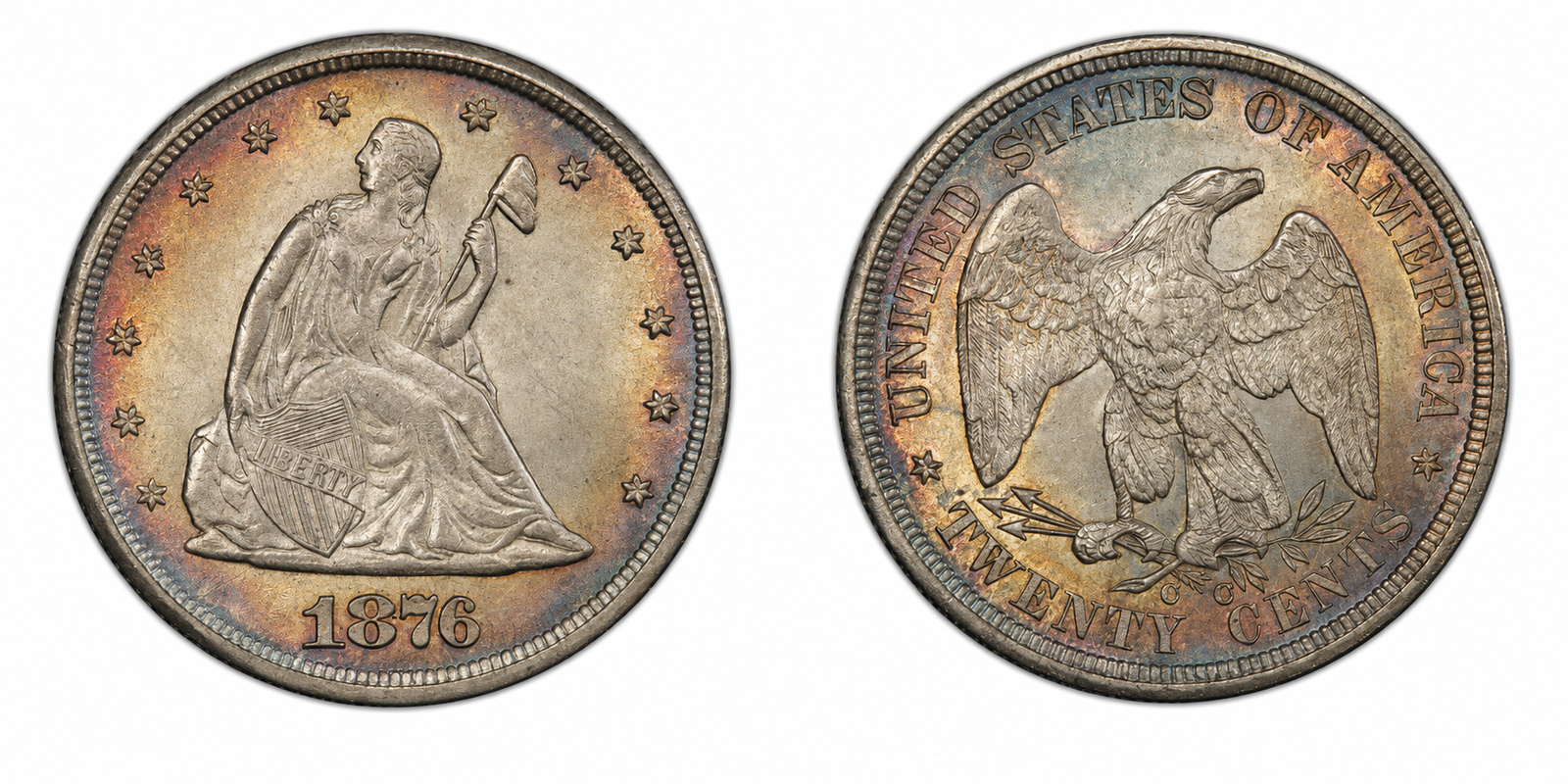
1875–1878: Liberty Seated Twenty-Cent Piece history
1875–1878: Liberty Seated Twenty-Cent Piece was created to improve change-making in western commerce but was easily confused with the quarter. Circulation strikes ended after 1876; the 1877 and 1878 issues are proofs only.
William Barber’s Seated Liberty design uses a plain edge, which helps distinguish the denomination from the reeded quarter. The 5.00-gram .900-silver standard contains about 0.1447 troy ounce of silver.
Liberty Seated Twenty-Cent Piece history notes
Congress authorized the silver twenty-cent piece in 1875 after Mint officials argued it would help regions where five-cent coins circulated poorly. Its size and Liberty Seated obverse looked too much like the quarter, yet its plain edge and twenty-cent reverse caused confusion rather than convenience. Circulation strikes ended after 1876; only proofs were made in 1877 and 1878.
The plain edge is an important identifier because contemporary quarters have reeded edges. Collectors also verify mint marks below the eagle, look for strong detail on Liberty and the eagle, and treat the rare 1876-CC with exceptional caution because most of that issue was melted.