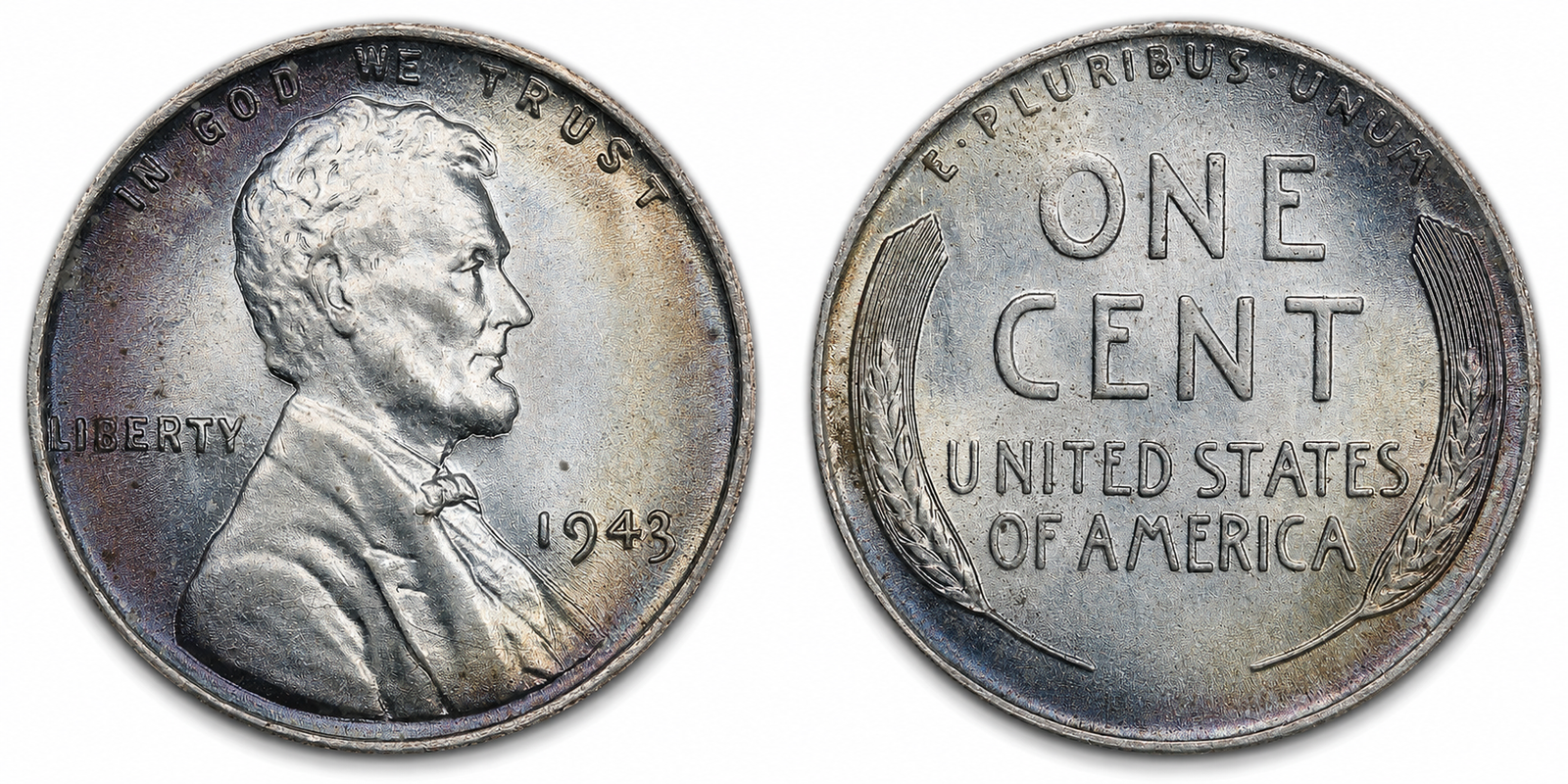
Coin specifications and design
Design identification
Obverse: Abraham Lincoln portrait.

U.S. Mint coin reference
Obverse: Abraham Lincoln portrait.
Copper was redirected to wartime needs in 1943, so the cent was struck on zinc-coated steel planchets for one year. The magnetic 2.70-gram coins look very different from bronze cents, although worn or reprocessed surfaces can disguise their original appearance.
A few 1943 bronze cents and 1944 steel cents are famous off-metal errors, not normal versions of this subtype. Magnetism, weight, date diagnostics, and professional authentication are important for extraordinary claims.
Copper was redirected to wartime use in 1943, and the Mint struck cents on zinc-coated steel planchets at Philadelphia, Denver, and San Francisco. The regular issue is magnetic and weighs about 2.70 grams, immediately separating it from a normal bronze cent.
Transitional errors: Genuine 1943 bronze cents were struck on leftover copper-alloy planchets and are major rarities. Copper plating applied to an ordinary steel cent does not reproduce the weight or magnetic response of a bronze planchet.
Surface problems: Breaks in the zinc coating expose the steel core to corrosion. Reprocessed pieces were stripped and replated after leaving the Mint; their bright, uniform surfaces differ from intact original zinc skin and should not be described as original Mint State surfaces.